•  
25th China International Industry Fair in Shanghai

25th China International Industry Fair in Shanghai

SHANGHAI, CHINA - SEPTEMBER 23, 2025 - A humanoid robot demonstrates tea art at The 25th China International Industry Fair in Shanghai, China on September 23, 2025.

  •  
Tea Garden Workers - India

Tea Garden Workers - India

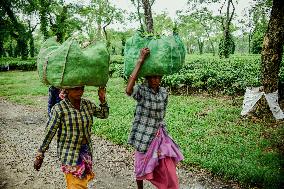
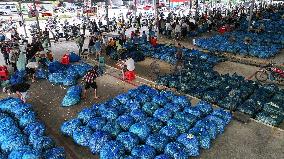
Workers on a truck loaded with green sacks of freshly plucked tea leaves in Golaghat, Assam, India on August 9, 2025. Assam’s tea gardens, employing nearly a million workers across 850 estates, produce more than half of India’s total tea output in an industry that is over 170 years old, with most workers coming from tribal communities. Photo by Hafiz Ahmed/Middle East images/ABACAPRESS.COM

  •  
Tea Garden Workers - India

Tea Garden Workers - India

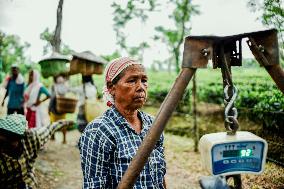
A tea worker stands near a weighing scale at a garden in Golaghat, Assam, India on August 9, 2025. Assam’s tea gardens, employing nearly a million workers across 850 estates, produce more than half of India’s total tea output in an industry that is over 170 years old, with most workers coming from tribal communities. Photo by Hafiz Ahmed/Middle East images/ABACAPRESS.COM

  •  
Tea Garden Workers - India

Tea Garden Workers - India

A tea worker stands near a weighing scale at a garden in Golaghat, Assam, India on August 9, 2025. Assam’s tea gardens, employing nearly a million workers across 850 estates, produce more than half of India’s total tea output in an industry that is over 170 years old, with most workers coming from tribal communities. Photo by Hafiz Ahmed/Middle East images/ABACAPRESS.COM

  •  
Tea Garden Workers - India

Tea Garden Workers - India

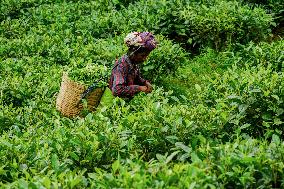
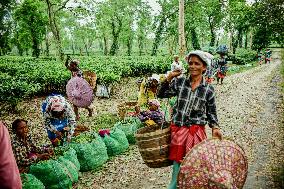
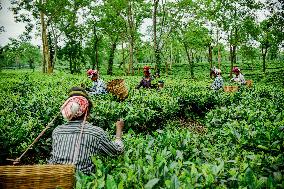
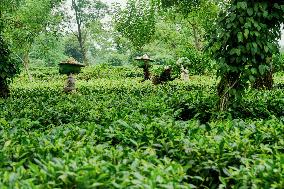
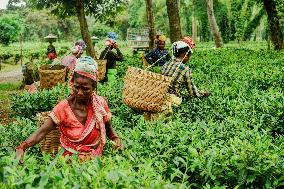
Tea garden workers carry baskets while plucking tea leaves at a plantation in Golaghat, Assam, India on August 9, 2025. Assam’s tea gardens, employing nearly a million workers across 850 estates, produce more than half of India’s total tea output in an industry that is over 170 years old, with most workers coming from tribal communities. Photo by Hafiz Ahmed/Middle East images/ABACAPRESS.COM

  •  
Tea Garden Workers - India

Tea Garden Workers - India

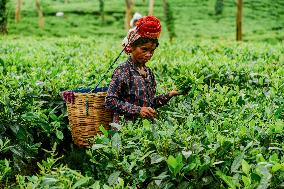
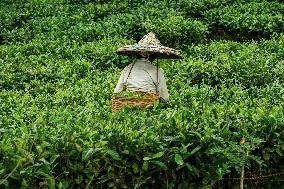
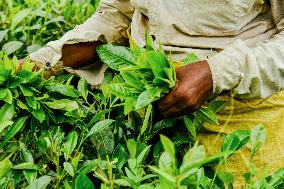
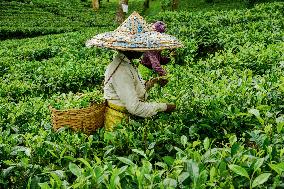
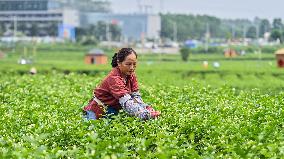
A tea garden worker plucks tea leaves at a plantation in Golaghat, Assam, India on August 9, 2025. Assam’s tea gardens employ nearly a million workers, mostly from tribal communities, across 850 estates, producing more than half of India’s total tea output in an industry that is 172 years old. Photo by Hafiz Ahmed/Middle East images/ABACAPRESS.COM

  •  
Tea Garden Workers - India

Tea Garden Workers - India

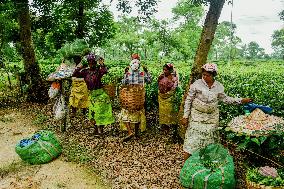
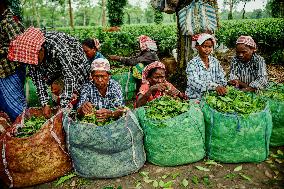
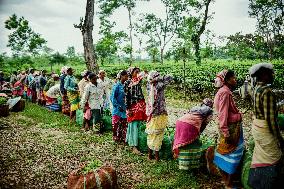
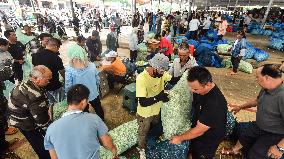
Tea garden workers gather around filled sacks of tea leaves at a collection point in Golaghat, Assam, India on August 9, 2025. Assam’s tea gardens, employing nearly a million workers across 850 estates, produce more than half of India’s total tea output in an industry that is over 170 years old, with most workers coming from tribal communities. Photo by Hafiz Ahmed/Middle East images/ABACAPRESS.COM

  •  
Tea Garden Workers - India

Tea Garden Workers - India

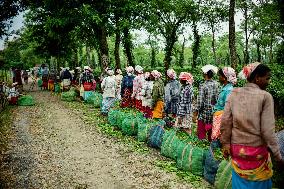
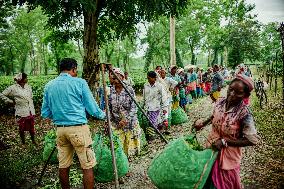
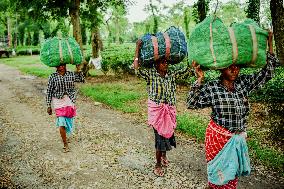
Tea garden workers carry large sacks of freshly plucked leaves on their heads in Golaghat, Assam, India on August 9, 2025. Assam’s tea gardens, employing nearly a million workers across 850 estates, produce more than half of India’s total tea output in an industry that is over 170 years old, with most workers coming from tribal communities. Photo by Hafiz Ahmed/Middle East images/ABACAPRESS.COM

  •  
Tea Garden Workers - India

Tea Garden Workers - India

A tea worker stands near a weighing scale at a garden in Golaghat, Assam, India on August 9, 2025. Assam’s tea gardens, employing nearly a million workers across 850 estates, produce more than half of India’s total tea output in an industry that is over 170 years old, with most workers coming from tribal communities. Photo by Hafiz Ahmed/Middle East images/ABACAPRESS.COM

  •  
Tea Garden Workers - India

Tea Garden Workers - India

A tea garden worker plucks tea leaves at a plantation in Golaghat, Assam, India on August 9, 2025. Assam’s tea gardens employ nearly a million workers, mostly from tribal communities, across 850 estates, producing more than half of India’s total tea output in an industry that is 172 years old. Photo by Hafiz Ahmed/Middle East images/ABACAPRESS.COM

  •  
Tea Garden Workers - India

Tea Garden Workers - India

A tea garden worker plucks tea leaves at a plantation in Golaghat, Assam, India on August 9, 2025. Assam’s tea gardens employ nearly a million workers, mostly from tribal communities, across 850 estates, producing more than half of India’s total tea output in an industry that is 172 years old. Photo by Hafiz Ahmed/Middle East images/ABACAPRESS.COM

  •  
Tea Garden Workers - India

Tea Garden Workers - India

A tea garden worker plucks tea leaves at a plantation in Golaghat, Assam, India on August 9, 2025. Assam’s tea gardens employ nearly a million workers, mostly from tribal communities, across 850 estates, producing more than half of India’s total tea output in an industry that is 172 years old. Photo by Hafiz Ahmed/Middle East images/ABACAPRESS.COM

  •  
Tea Garden Workers - India

Tea Garden Workers - India

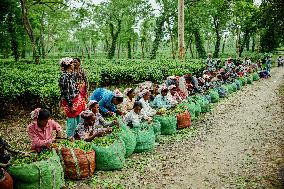
Women sort tea leaves into large sacks at a collection point in Golaghat, Assam, India on August 9, 2025. Assam’s tea gardens, employing nearly a million workers across 850 estates, produce more than half of India’s total tea output in an industry that is over 170 years old, with most workers coming from tribal communities. Photo by Hafiz Ahmed/Middle East images/ABACAPRESS.COM

  •  
Tea Garden Workers - India

Tea Garden Workers - India

Tea garden workers carry baskets while plucking tea leaves at a plantation in Golaghat, Assam, India on August 9, 2025. Assam’s tea gardens, employing nearly a million workers across 850 estates, produce more than half of India’s total tea output in an industry that is over 170 years old, with most workers coming from tribal communities. Photo by Hafiz Ahmed/Middle East images/ABACAPRESS.COM

  •  
Tea Garden Workers - India

Tea Garden Workers - India

Women sort tea leaves into large sacks at a collection point in Golaghat, Assam, India on August 9, 2025. Assam’s tea gardens, employing nearly a million workers across 850 estates, produce more than half of India’s total tea output in an industry that is over 170 years old, with most workers coming from tribal communities. Photo by Hafiz Ahmed/Middle East images/ABACAPRESS.COM

  •  
Tea Garden Workers - India

Tea Garden Workers - India

A worker places a sack of tea leaves onto a weighing scale in Golaghat, Assam, India on August 9, 2025. Assam’s tea gardens, employing nearly a million workers across 850 estates, produce more than half of India’s total tea output in an industry that is over 170 years old, with most workers coming from tribal communities. Photo by Hafiz Ahmed/Middle East images/ABACAPRESS.COM

  •  
Tea Garden Workers - India

Tea Garden Workers - India

A tea worker stands near a weighing scale at a garden in Golaghat, Assam, India on August 9, 2025. Assam’s tea gardens, employing nearly a million workers across 850 estates, produce more than half of India’s total tea output in an industry that is over 170 years old, with most workers coming from tribal communities. Photo by Hafiz Ahmed/Middle East images/ABACAPRESS.COM

  •  
Tea Garden Workers - India

Tea Garden Workers - India

Tea garden workers pluck tea leaves at a plantation in Golaghat, Assam, India on August 9, 2025. Assam’s tea gardens, employing nearly a million workers across 850 estates, produce more than half of India’s total tea output in an industry that is over 170 years old, with most workers coming from tribal communities. Photo by Hafiz Ahmed/Middle East images/ABACAPRESS.COM

  •  
Tea Garden Workers - India

Tea Garden Workers - India

Tea garden workers gather around filled sacks of tea leaves at a collection point in Golaghat, Assam, India on August 9, 2025. Assam’s tea gardens, employing nearly a million workers across 850 estates, produce more than half of India’s total tea output in an industry that is over 170 years old, with most workers coming from tribal communities. Photo by Hafiz Ahmed/Middle East images/ABACAPRESS.COM

  •  
Tea Garden Workers - India

Tea Garden Workers - India

Tea garden workers carry baskets while plucking tea leaves at a plantation in Golaghat, Assam, India on August 9, 2025. Assam’s tea gardens, employing nearly a million workers across 850 estates, produce more than half of India’s total tea output in an industry that is over 170 years old, with most workers coming from tribal communities. Photo by Hafiz Ahmed/Middle East images/ABACAPRESS.COM

  •  
Tea Garden Workers - India

Tea Garden Workers - India

Tea garden workers carry baskets while plucking tea leaves at a plantation in Golaghat, Assam, India on August 9, 2025. Assam’s tea gardens, employing nearly a million workers across 850 estates, produce more than half of India’s total tea output in an industry that is over 170 years old, with most workers coming from tribal communities. Photo by Hafiz Ahmed/Middle East images/ABACAPRESS.COM

  •  
Tea Garden Workers - India

Tea Garden Workers - India

Tea garden workers carry large sacks of freshly plucked leaves on their heads in Golaghat, Assam, India on August 9, 2025. Assam’s tea gardens, employing nearly a million workers across 850 estates, produce more than half of India’s total tea output in an industry that is over 170 years old, with most workers coming from tribal communities. Photo by Hafiz Ahmed/Middle East images/ABACAPRESS.COM

  •  
Tea Garden Workers - India

Tea Garden Workers - India

Tea garden workers carry baskets while plucking tea leaves at a plantation in Golaghat, Assam, India on August 9, 2025. Assam’s tea gardens, employing nearly a million workers across 850 estates, produce more than half of India’s total tea output in an industry that is over 170 years old, with most workers coming from tribal communities. Photo by Hafiz Ahmed/Middle East images/ABACAPRESS.COM

  •  
Tea Garden Workers - India

Tea Garden Workers - India

A worker places a sack of tea leaves onto a weighing scale in Golaghat, Assam, India on August 9, 2025. Assam’s tea gardens, employing nearly a million workers across 850 estates, produce more than half of India’s total tea output in an industry that is over 170 years old, with most workers coming from tribal communities. Photo by Hafiz Ahmed/Middle East images/ABACAPRESS.COM

  •  
Tea Garden Workers - India

Tea Garden Workers - India

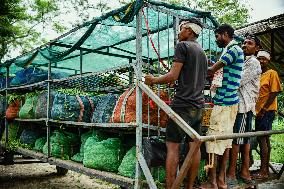
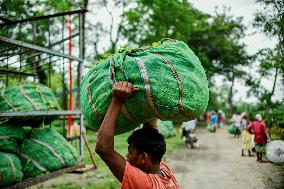
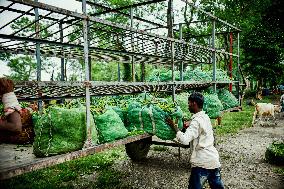
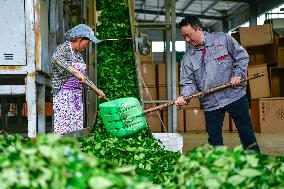
A worker loads green sacks of tea leaves onto a truck in Golaghat, Assam, India on August 9, 2025. Assam’s tea gardens, employing nearly a million workers across 850 estates, produce more than half of India’s total tea output in an industry that is over 170 years old, with most workers coming from tribal communities. Photo by Hafiz Ahmed/Middle East images/ABACAPRESS.COM

  •  
Jasmine Flower Industry in Guangxi - China

Jasmine Flower Industry in Guangxi - China

This photo taken on July 31, 2025 shows samples of jasmine tea preserved in a tea-house in Hengzhou City, south China's Guangxi Zhuang Autonomous Region. Hengzhou, dubbed the "hometown of jasmine in China," is home to some 340,000 jasmine flower farmers and over 180,000 mu (12,000 hectares) of jasmine fields. In recent years, the city has promoted the development of a whole industrial chain covering jasmine planting, processing and cultural tourism. Photo by Zhang Ailin/Xinhua/ABACAPRESS.COM

  •  
Jasmine Flower Industry in Guangxi - China

Jasmine Flower Industry in Guangxi - China

Jasmine tea is pictured at a tea plant in Hengzhou City, south China's Guangxi Zhuang Autonomous Region, on July 31, 2025. Hengzhou, dubbed the "hometown of jasmine in China," is home to some 340,000 jasmine flower farmers and over 180,000 mu (12,000 hectares) of jasmine fields. In recent years, the city has promoted the development of a whole industrial chain covering jasmine planting, processing and cultural tourism. Photo by Zhang Ailin/Xinhua/ABACAPRESS.COM

  •  
Jasmine Flower Industry in Guangxi - China

Jasmine Flower Industry in Guangxi - China

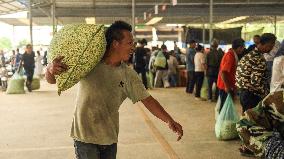
A tea farmer carrying jasmine flowers on his shoulder is pictured at a jasmine trading market in Hengzhou City, south China's Guangxi Zhuang Autonomous Region on July 31, 2025. Hengzhou, dubbed the "hometown of jasmine in China," is home to some 340,000 jasmine flower farmers and over 180,000 mu (12,000 hectares) of jasmine fields. In recent years, the city has promoted the development of a whole industrial chain covering jasmine planting, processing and cultural tourism. Photo by Zhang Ailin/Xinhua/ABACAPRESS.COM

  •  
Jasmine Flower Industry in Guangxi - China

Jasmine Flower Industry in Guangxi - China

A shop assistant makes tea for tourists at a tea-house in Hengzhou City, south China's Guangxi Zhuang Autonomous Region, on July 31, 2025. Hengzhou, dubbed the "hometown of jasmine in China," is home to some 340,000 jasmine flower farmers and over 180,000 mu (12,000 hectares) of jasmine fields. In recent years, the city has promoted the development of a whole industrial chain covering jasmine planting, processing and cultural tourism. Photo by Zhang Ailin/Xinhua/ABACAPRESS.COM

  •  
Jasmine Flower Industry in Guangxi - China

Jasmine Flower Industry in Guangxi - China

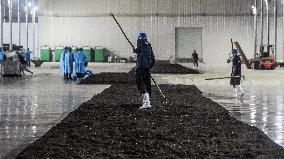
A worker produces jasmine tea at a tea plant in Hengzhou City, south China's Guangxi Zhuang Autonomous Region on July 31, 2025. Hengzhou, dubbed the "hometown of jasmine in China," is home to some 340,000 jasmine flower farmers and over 180,000 mu (12,000 hectares) of jasmine fields. In recent years, the city has promoted the development of a whole industrial chain covering jasmine planting, processing and cultural tourism. Photo by Zhang Ailin/Xinhua/ABACAPRESS.COM

  •  
Jasmine Flower Industry in Guangxi - China

Jasmine Flower Industry in Guangxi - China

Workers produce jasmine tea at a tea plant in Hengzhou City, south China's Guangxi Zhuang Autonomous Region, on July 31, 2025. Hengzhou, dubbed the "hometown of jasmine in China," is home to some 340,000 jasmine flower farmers and over 180,000 mu (12,000 hectares) of jasmine fields. In recent years, the city has promoted the development of a whole industrial chain covering jasmine planting, processing and cultural tourism. Photo by Zhang Ailin/Xinhua/ABACAPRESS.COM

  •  
Jasmine Flower Industry in Guangxi - China

Jasmine Flower Industry in Guangxi - China

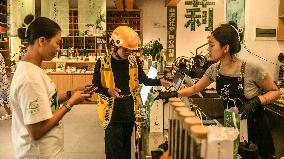
A delivery man picks up jasmine tea drinks at a tea shop in Hengzhou City, south China's Guangxi Zhuang Autonomous Region on July 31, 2025. Hengzhou, dubbed the "hometown of jasmine in China," is home to some 340,000 jasmine flower farmers and over 180,000 mu (12,000 hectares) of jasmine fields. In recent years, the city has promoted the development of a whole industrial chain covering jasmine planting, processing and cultural tourism. Photo by Zhang Ailin/Xinhua/ABACAPRESS.COM

  •  
Jasmine Flower Industry in Guangxi - China

Jasmine Flower Industry in Guangxi - China

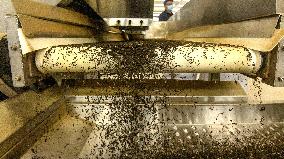
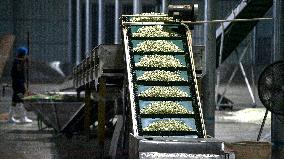
A production line of jasmine tea is pictured at a local tea plant in Hengzhou City, south China's Guangxi Zhuang Autonomous Region, on July 31, 2025. Hengzhou, dubbed the "hometown of jasmine in China," is home to some 340,000 jasmine flower farmers and over 180,000 mu (12,000 hectares) of jasmine fields. In recent years, the city has promoted the development of a whole industrial chain covering jasmine planting, processing and cultural tourism. Photo by Huang Xiaobang/Xinhua/ABACAPRESS.COM

  •  
Jasmine Flower Industry in Guangxi - China

Jasmine Flower Industry in Guangxi - China

A drone photo taken on July 31, 2025 shows tea farmers selling fresh-picked jasmine flowers at a jasmine trading market in Hengzhou City, south China's Guangxi Zhuang Autonomous Region. Hengzhou, dubbed the "hometown of jasmine in China," is home to some 340,000 jasmine flower farmers and over 180,000 mu (12,000 hectares) of jasmine fields. In recent years, the city has promoted the development of a whole industrial chain covering jasmine planting, processing and cultural tourism. Photo by Huang Xiaobang/Xinhua/ABACAPRESS.COM

  •  
Jasmine Flower Industry in Guangxi - China

Jasmine Flower Industry in Guangxi - China

A tea farmer picks jasmine flowers at a jasmine garden in Hengzhou City, south China's Guangxi Zhuang Autonomous Region, on July 31, 2025. Hengzhou, dubbed the "hometown of jasmine in China," is home to some 340,000 jasmine flower farmers and over 180,000 mu (12,000 hectares) of jasmine fields. In recent years, the city has promoted the development of a whole industrial chain covering jasmine planting, processing and cultural tourism. Photo by Huang Xiaobang/Xinhua/ABACAPRESS.COM

  •  
Jasmine Flower Industry in Guangxi - China

Jasmine Flower Industry in Guangxi - China

Tea farmers trade at a jasmine trading market in Hengzhou City, south China's Guangxi Zhuang Autonomous Region, on July 31, 2025. Hengzhou, dubbed the "hometown of jasmine in China," is home to some 340,000 jasmine flower farmers and over 180,000 mu (12,000 hectares) of jasmine fields. In recent years, the city has promoted the development of a whole industrial chain covering jasmine planting, processing and cultural tourism. Photo by Huang Xiaobang/Xinhua/ABACAPRESS.COM

  •  
Jasmine Flower Industry in Guangxi - China

Jasmine Flower Industry in Guangxi - China

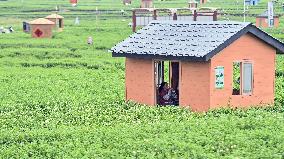
A tea farmer rests at a jasmine garden in Hengzhou City, south China's Guangxi Zhuang Autonomous Region, on July 31, 2025. Hengzhou, dubbed the "hometown of jasmine in China," is home to some 340,000 jasmine flower farmers and over 180,000 mu (12,000 hectares) of jasmine fields. In recent years, the city has promoted the development of a whole industrial chain covering jasmine planting, processing and cultural tourism. Photo by Huang Xiaobang/Xinhua/ABACAPRESS.COM

  •  
Rose Industry
 in Zhangye

Rose Industry in Zhangye

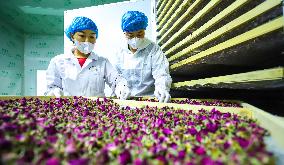
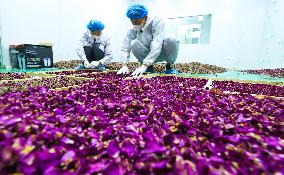
ZHANGYE, CHINA - JUNE 11, 2025 - Staff members are drying rose tea in the rose processing workshop in Zhangye City, Gansu Province, China on June 11, 2025.

  •  
Rose Industry
 in Zhangye

Rose Industry in Zhangye

ZHANGYE, CHINA - JUNE 11, 2025 - Staff members are drying rose tea in the rose processing workshop in Zhangye City, Gansu Province, China on June 11, 2025.

  •  
Promoting Matcha Tea In Guizhou - China

Promoting Matcha Tea In Guizhou - China

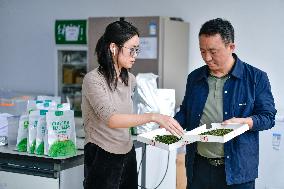
Wei Yong R) demonstrates the technique of drying tea leaves to a villager at a tea processing factory in Jiangkou County, southwest China's Guizhou Province, China, on May 15, 2025. Located at the foot of Mount Fanjing, a UNESCO World Heritage Site, Jiangkou County is a powerhouse in the world's matcha industry. As a native of Jiangkou and a specialist of tea industry, Wei Yong works at the research and development department of Guizhou Gui Tea Group Co. Wei, who originally majored in chemical engineering, never imagined that his technical experience in product testing could contribute to the research and development of matcha industry in his hometown. He not only offers professional suggestions in various processes of matcha production, but also conducts tests and provides feedback on matcha products. Wei believes that matcha has brought not only technological breakthroughs but also reshaped the industrial structure of the tea industry in Guizhou. Matcha helps tea farmers increase their income while promotin

  •  
Promoting Matcha Tea In Guizhou - China

Promoting Matcha Tea In Guizhou - China

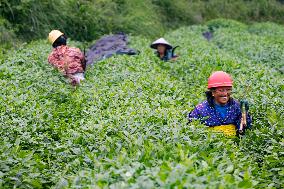
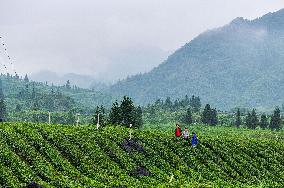
Tea farmers work at a tea garden in Jiangkou County, southwest China's Guizhou Province, China, on May 15, 2025. Located at the foot of Mount Fanjing, a UNESCO World Heritage Site, Jiangkou County is a powerhouse in the world's matcha industry. As a native of Jiangkou and a specialist of tea industry, Wei Yong works at the research and development department of Guizhou Gui Tea Group Co. Wei, who originally majored in chemical engineering, never imagined that his technical experience in product testing could contribute to the research and development of matcha industry in his hometown. He not only offers professional suggestions in various processes of matcha production, but also conducts tests and provides feedback on matcha products. Wei believes that matcha has brought not only technological breakthroughs but also reshaped the industrial structure of the tea industry in Guizhou. Matcha helps tea farmers increase their income while promoting the healthy and rapid development of the tea industry in Guizhou. "

  •  
Promoting Matcha Tea In Guizhou - China

Promoting Matcha Tea In Guizhou - China

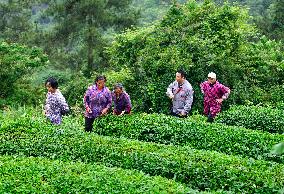
A drone photo taken on May 15, 2025 shows Wei Yong (2nd, R) explaining key points of harvesting tea leaves to villagers in Jiangkou County, southwest China's Guizhou Province, China, on May 15, 2025. Located at the foot of Mount Fanjing, a UNESCO World Heritage Site, Jiangkou County is a powerhouse in the world's matcha industry. As a native of Jiangkou and a specialist of tea industry, Wei Yong works at the research and development department of Guizhou Gui Tea Group Co. Wei, who originally majored in chemical engineering, never imagined that his technical experience in product testing could contribute to the research and development of matcha industry in his hometown. He not only offers professional suggestions in various processes of matcha production, but also conducts tests and provides feedback on matcha products. Wei believes that matcha has brought not only technological breakthroughs but also reshaped the industrial structure of the tea industry in Guizhou. Matcha helps tea farmers increase their inc

  •  
Promoting Matcha Tea In Guizhou - China

Promoting Matcha Tea In Guizhou - China

An aerial drone photo taken on May 15, 2025 shows Wei Yong (C) explaining key points of planting to tea farmers in Jiangkou County, southwest China's Guizhou Province. Located at the foot of Mount Fanjing, a UNESCO World Heritage Site, Jiangkou County is a powerhouse in the world's matcha industry. As a native of Jiangkou and a specialist of tea industry, Wei Yong works at the research and development department of Guizhou Gui Tea Group Co. Wei, who originally majored in chemical engineering, never imagined that his technical experience in product testing could contribute to the research and development of matcha industry in his hometown. He not only offers professional suggestions in various processes of matcha production, but also conducts tests and provides feedback on matcha products. Wei believes that matcha has brought not only technological breakthroughs but also reshaped the industrial structure of the tea industry in Guizhou. Matcha helps tea farmers increase their income while promoting the healthy

  •  
Promoting Matcha Tea In Guizhou - China

Promoting Matcha Tea In Guizhou - China

Wei Yong R) checks samples of raw materials for matcha production with a colleague in Jiangkou County, southwest China's Guizhou Province, China, on May 14, 2025. Located at the foot of Mount Fanjing, a UNESCO World Heritage Site, Jiangkou County is a powerhouse in the world's matcha industry. As a native of Jiangkou and a specialist of tea industry, Wei Yong works at the research and development department of Guizhou Gui Tea Group Co. Wei, who originally majored in chemical engineering, never imagined that his technical experience in product testing could contribute to the research and development of matcha industry in his hometown. He not only offers professional suggestions in various processes of matcha production, but also conducts tests and provides feedback on matcha products. Wei believes that matcha has brought not only technological breakthroughs but also reshaped the industrial structure of the tea industry in Guizhou. Matcha helps tea farmers increase their income while promoting the healthy and r

  •  
Mount Fanjing Matcha Industry - China

Mount Fanjing Matcha Industry - China

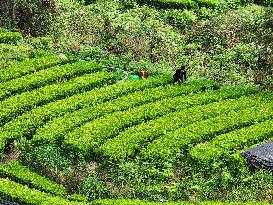
A drone photo shows a farmer weeding at a tea garden in Jiangkou County of Tongren, southwest China's Guizhou Province, on April 16, 2025. Located at the foot of Mount Fanjing, a UNESCO World Heritage Site, Jiangkou County is a powerhouse in the world's matcha industry. The county boasts over 10,000 hectares of tea plantations, nearly a fifth of which are dedicated to matcha production. In 2024, Jiangkou County produced more than 1,200 tonnes of matcha with a total output value of 350 million yuan (about 48.02 million U.S. dollars). The local matcha products have been exported to more than 40 overseas markets. Experts and agronomists believe that Guizhou, located on a plateau, possesses geographical and climatic advantages such as high altitude, low latitude, abundant fog and limited sunlight ideal for growing tea. Therefore, tea produced in this area is green, ecological and organic. Photo by Ou Dongqu/Xinhua/ABACAPRESS.COM

  •  
Mount Fanjing Matcha Industry - China

Mount Fanjing Matcha Industry - China

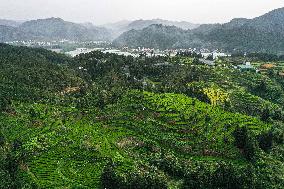
An aerial drone photo shows a tea garden in Jiangkou County of Tongren, southwest China's Guizhou Province, on April 16, 2025. Located at the foot of Mount Fanjing, a UNESCO World Heritage Site, Jiangkou County is a powerhouse in the world's matcha industry. The county boasts over 10,000 hectares of tea plantations, nearly a fifth of which are dedicated to matcha production. In 2024, Jiangkou County produced more than 1,200 tonnes of matcha with a total output value of 350 million yuan (about 48.02 million U.S. dollars). The local matcha products have been exported to more than 40 overseas markets. Experts and agronomists believe that Guizhou, located on a plateau, possesses geographical and climatic advantages such as high altitude, low latitude, abundant fog and limited sunlight ideal for growing tea. Therefore, tea produced in this area is green, ecological and organic. Photo by Yang Wenbin/Xinhua/ABACAPRESS.COM

  •  
Mount Fanjing Matcha Industry - China

Mount Fanjing Matcha Industry - China

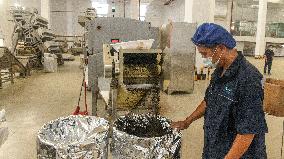
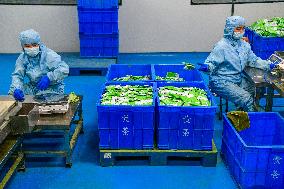
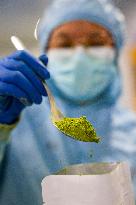
Workers pack matcha powder at a tea industrial park in Jiangkou County of Tongren, southwest China's Guizhou Province, on April 14, 2025. Located at the foot of Mount Fanjing, a UNESCO World Heritage Site, Jiangkou County is a powerhouse in the world's matcha industry. The county boasts over 10,000 hectares of tea plantations, nearly a fifth of which are dedicated to matcha production. In 2024, Jiangkou County produced more than 1,200 tonnes of matcha with a total output value of 350 million yuan (about 48.02 million U.S. dollars). The local matcha products have been exported to more than 40 overseas markets. Experts and agronomists believe that Guizhou, located on a plateau, possesses geographical and climatic advantages such as high altitude, low latitude, abundant fog and limited sunlight ideal for growing tea. Therefore, tea produced in this area is green, ecological and organic. Photo by Yang Wenbin/Xinhua/ABACAPRESS.COM

  •  
Mount Fanjing Matcha Industry - China

Mount Fanjing Matcha Industry - China

A worker packs matcha powder at a tea industrial park in Jiangkou County of Tongren, southwest China's Guizhou Province, on April 14, 2025. Located at the foot of Mount Fanjing, a UNESCO World Heritage Site, Jiangkou County is a powerhouse in the world's matcha industry. The county boasts over 10,000 hectares of tea plantations, nearly a fifth of which are dedicated to matcha production. In 2024, Jiangkou County produced more than 1,200 tonnes of matcha with a total output value of 350 million yuan (about 48.02 million U.S. dollars). The local matcha products have been exported to more than 40 overseas markets. Experts and agronomists believe that Guizhou, located on a plateau, possesses geographical and climatic advantages such as high altitude, low latitude, abundant fog and limited sunlight ideal for growing tea. Therefore, tea produced in this area is green, ecological and organic. Photo by Ou Dongqu/Xinhua/ABACAPRESS.COM

  •  
Mount Fanjing Matcha Industry - China

Mount Fanjing Matcha Industry - China

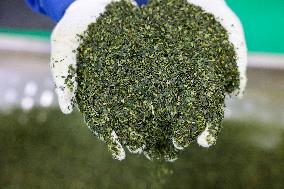
A staff member checks the raw materials for matcha production at a tea industrial park in Jiangkou County of Tongren, southwest China's Guizhou Province, on April 14, 2025. Located at the foot of Mount Fanjing, a UNESCO World Heritage Site, Jiangkou County is a powerhouse in the world's matcha industry. The county boasts over 10,000 hectares of tea plantations, nearly a fifth of which are dedicated to matcha production. In 2024, Jiangkou County produced more than 1,200 tonnes of matcha with a total output value of 350 million yuan (about 48.02 million U.S. dollars). The local matcha products have been exported to more than 40 overseas markets. Experts and agronomists believe that Guizhou, located on a plateau, possesses geographical and climatic advantages such as high altitude, low latitude, abundant fog and limited sunlight ideal for growing tea. Therefore, tea produced in this area is green, ecological and organic. Photo by Ou Dongqu/Xinhua/ABACAPRESS.COM

  •  
Mount Fanjing Matcha Industry - China

Mount Fanjing Matcha Industry - China

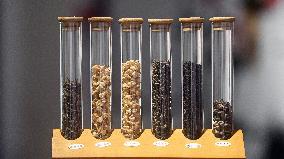
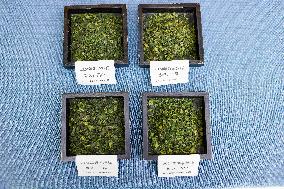
Raw materials for matcha production are on display in a tea industrial park in Jiangkou County of Tongren, southwest China's Guizhou Province, on April 14, 2025. Located at the foot of Mount Fanjing, a UNESCO World Heritage Site, Jiangkou County is a powerhouse in the world's matcha industry. The county boasts over 10,000 hectares of tea plantations, nearly a fifth of which are dedicated to matcha production. In 2024, Jiangkou County produced more than 1,200 tonnes of matcha with a total output value of 350 million yuan (about 48.02 million U.S. dollars). The local matcha products have been exported to more than 40 overseas markets. Experts and agronomists believe that Guizhou, located on a plateau, possesses geographical and climatic advantages such as high altitude, low latitude, abundant fog and limited sunlight ideal for growing tea. Therefore, tea produced in this area is green, ecological and organic. Photo by Ou Dongqu/Xinhua/ABACAPRESS.COM

  • Main
  • Top
  • Editorial
  • Creative
  • About Us
  • About ILG
  • Terms of use
  • Company
  • BEHIND
  • Price List
  • Single Plan
  • Monthly Plan
  • Services
  • Shooting
  • Rights Clearance
  • Support
  • FAQ
  • How To Buy
  • Contact Us
  • Become a Partner

© KYODO NEWS IMAGES INC

All Rights Reserved.

  • Editorial
  • Olympics
  • News
  • Sports
  • Japan
  • Tech
  • Royal
  • Disaster
  • NorthKorea
  • Old Japan
  • SNS
  • Creative
  • Food
  • Japan
  • Landscape
  • Animal
  • Popular
  • #Ukraine
  • #Russia
  • #coronavirus
  • #N. Korea
  • #China
  • #Thailand
  • #Ukraine
  • #Russia
  • #coronavirus
  • #N. Korea
  • #China
  • #Thailand
  • Food
  • Japan
  • Landscape
  • Animal
  • Olympics
  • News
  • Sports
  • Japan
  • Tech
  • Royal
  • Disaster
  • NorthKorea
  • Old Japan
  • SNS